
Dear Change Leader,
Victor stood at the front of the all-hands and said the words he’d rehearsed: “We’re steady. We’ve weathered worse than this.”
As VP of Client Services at a mid-sized consulting firm, he mostly believed it. Revenue was down, two competitors had made cuts, and the news outside the building was loud enough that people carried it into meetings whether he invited it in or not. Victor figured his job was to project calm so people could keep their heads down and do the work.
Three weeks later, his operations manager pulled him aside. “People aren’t buying it,” she said. “They can see the same numbers you can. They’re not panicking out loud — they’re panicking quietly. Updating resumes. Holding back ideas. Waiting to see what happens instead of telling you what they’re actually seeing.”
Victor had spent three weeks managing the story. His team had spent three weeks managing their fear — alone, and without him.
Two Organizations, and You’re Only Seeing One
Every leader is running two organizations right now. There’s the one on the org chart — the plan, the strategy deck, the version you present when you need people to feel steady. And there’s the one actually happening on the ground: the side conversations, the quiet worry, the things people notice but don’t say because they’re not sure it’s safe to say them.
Most of the time, the gap between those two organizations is manageable. This isn’t most of the time. Between a shakier economy and a world that feels genuinely unsettled, your people are absorbing more uncertainty than usual — and they’re absorbing it whether or not you address it.
Responsible transparency doesn’t mean having answers you don’t have. It means being honest about what’s actually true, including the parts that are still unclear. And psychological safety is what makes that honesty a two-way street — it’s the mechanism that lets people tell you what they’re really seeing, instead of what they think you want to hear. Without it, you end up leading the organization on the org chart while the real one quietly goes its own way.
Three Ways to Close the Gap
- Separate what you know from what you don’t — out loud. Vague reassurance (“we’re fine”) reads as either naive or evasive, and people fill in the blanks with worse stories than reality usually holds. Naming the uncertainty directly is what actually calms a room.
This week: In your next team update, say two sentences you don’t usually say together: “Here’s what I know for certain,” and “Here’s what’s still genuinely unclear, and I’ll tell you as soon as I do.”
- Make it safe to name what people are noticing. Psychological safety isn’t a mood you create with a slogan — it’s what people experience the next time they raise something uncomfortable and watch what happens to them for doing it. One defensive reaction undoes a dozen open-door invitations.
This week: Ask one specific question in a team meeting — “What are you seeing that I might be missing?” — and when someone answers honestly, respond with curiosity before anything else. No defending, no reframing, not yet.
- Invite people to help shape the response, not just receive it. Transparency that only flows downward keeps people as an audience. Real readiness comes from treating your team as co-creators — people with a stake in figuring out what comes next, not just people waiting to be told.
This week: Take one open question about the road ahead — a risk, a decision, a “what if” — and bring it to your team unfinished. Ask them to help you think it through, rather than presenting a conclusion.
Back to Victor
At his next team meeting, Victor tried something different. He admitted what he didn’t know about the quarter ahead, and then asked the question he’d been avoiding: “What are you seeing out there that I might be missing?”
The silence lasted a few seconds. Then a client-facing associate mentioned something Victor’s own dashboards hadn’t caught — a pattern of hesitation from two key accounts that read, to someone closer to the relationship, like early signs of churn. Someone else offered an idea for getting ahead of it, one Victor wouldn’t have thought of from where he sat.
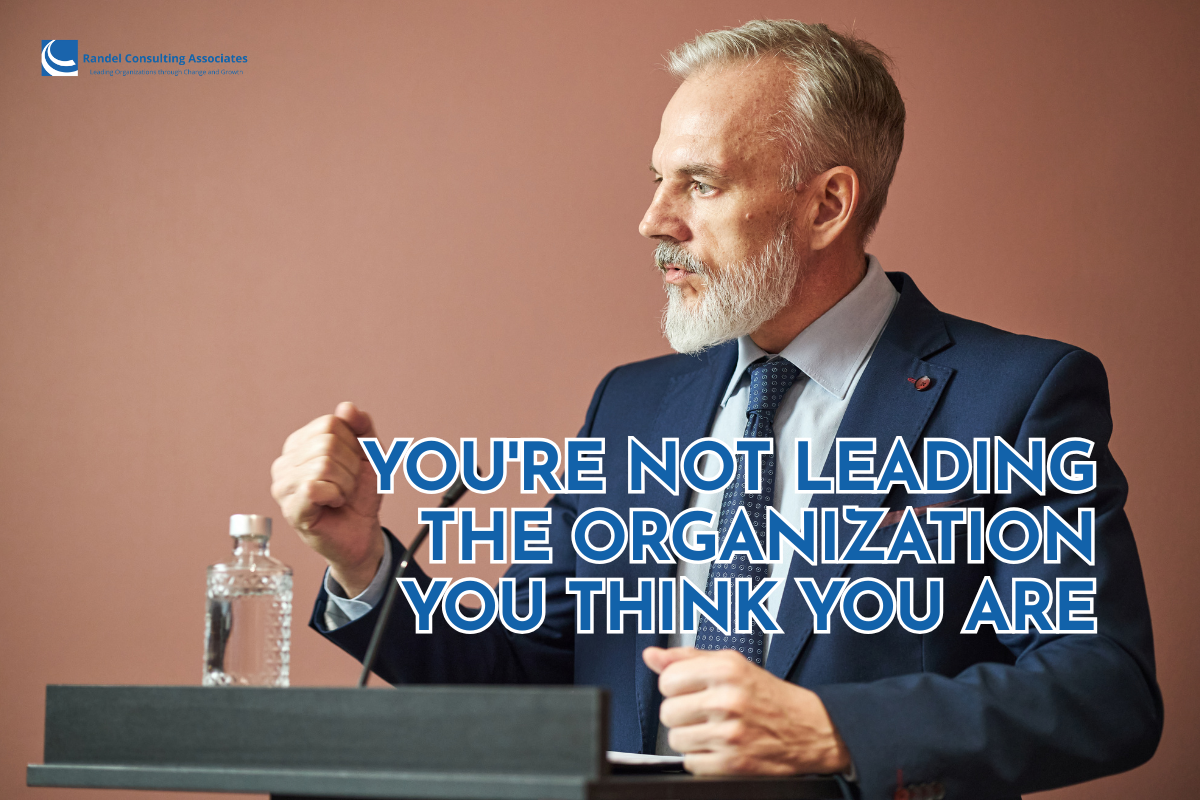
The uncertainty in front of Victor’s firm hadn’t gone away. But for the first time in weeks, he was leading the organization that actually existed — not the one he’d been narrating from the podium.
Until next time,

P.S. If you suspect the picture your team is presenting isn’t quite the whole picture, that gap between the organization you’re leading on paper and the one that’s actually happening is exactly the kind of thing I help clients close. Simply send me a message.
Recent Articles
Read other editions of this newsletter for further insights:
“What Leaders Fear to Say (But Teams Need to Hear)“ looks at the cost of strategic silence — the same information vacuum that leaves teams filling in worse stories than reality, explored here through what leaders choose not to say.
“Stop Defending Your Position“ explores what happens when honest input gets treated as a challenge to be defended against, rather than the reality-check every team needs psychological safety to offer.
“Surviving Isn’t the Same as Being Resilient“ traces a related gap — between how an organization looks from the outside and what’s actually happening to the people inside it, the same distinction at the heart of Victor’s story.
EFFECTIVE CHANGE RESULTS FROM INTENTIONAL LEADERSHIP
We’re a leadership and organization development consultancy. My team and I work with leaders like you to prepare for and lead successful change processes.
Here’s why our clients call us:
- Leadership Coaching: I support leaders as they navigate transitions into new roles or expanded responsibilities.
- Group Programs: Bringing groups of leaders together, I facilitate learning experiences and months-long programs that equip people to be effective change leaders.
- Effective Teams and Organizations: I work with leaders and their teams with tailored processes that increase their effectiveness, building layers of aligned teams that transform organizations.